Growing Fruit Trees in Pots: A UK Patio Guide
October 10, 2026 - Gardening Tips

October 10, 2026 - Gardening Tips
October 07, 2026 - Varieties
By mid-summer your orchard has an audience. Blackbirds work the cherry trees at dawn, wasps arrive the moment the plums soften, and a grey squirrel will take one bite from an apple before moving on to the next. A few losses are fair payment for a garden full of wildlife. A stripped tree is not. The trick is to decide early what you are willing to share, then protect the rest with the right barrier at the right moment.
Timing matters more than technology. Net a tree a fortnight too late and you have simply made the birds' work slightly harder to watch.
Fruit is only vulnerable for a short window, and that window moves through the season. Birds start on cherries and other soft fruit, work through plums and gages, then turn to pears and apples. Watch for the first pecked fruit in your area — that is your signal, not the calendar.
Net before the fruit begins to colour. Once birds have learned that a tree is worth visiting, they will return to it daily, so it pays to be early rather than thorough. Two or three weeks of protection per tree is usually enough; a whole season of netting is unnecessary work.
Early varieties take the heaviest hit, simply because there is little else ripe anywhere else. By late summer, hedgerow berries — rowan, hawthorn, elder — pull some of the pressure away from your trees. Wasps, unfortunately, do not get the message.
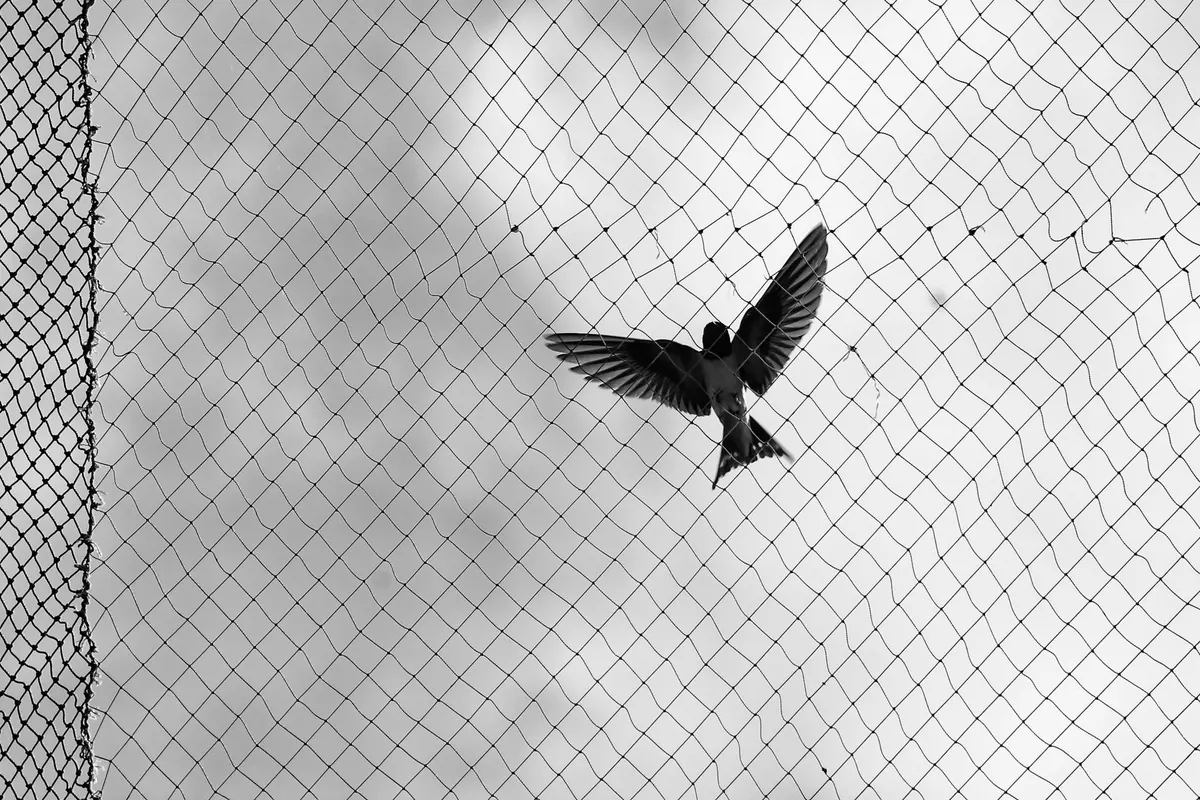
Netting is the single most effective defence, and the most commonly botched. Mesh size is the first consideration.
A fruit cage is the gold standard: a timber or metal frame with netting over the top and sides, a door for access, and a skirt pegged or weighted down all the way round. If a cage is not practical, drape netting over a frame of pipes or battens rather than directly onto the branches. Fruit pressed against the mesh can be pecked straight through it, and growth will push the netting out of shape within days.
Leave at least 15–20cm of clearance above the top of the tree. Secure the base — an unsecured skirt invites blackbirds to stroll underneath, and loose, sagging netting is genuinely dangerous to birds and hedgehogs. Check the whole thing once a day while fruit is ripening, and take it down as soon as the crop is picked.
Net early, check daily, pick promptly. Most wildlife damage happens in the gaps between those three jobs.
An old, sprawling apple tree is not going to be caged, and neither is a hedge-trained plum. Visual deterrents — reflective tape, hanging CDs, scare-eye balloons — do work, but only briefly. Birds habituate in a matter of days, sometimes hours. Move them every couple of days, change the type of deterrent, and accept that they will reduce damage rather than prevent it. On a large open plot with several deterrents in play, that is often enough. In a small garden, with the same robin watching you hang the tape, it rarely is.
Bird feeders can help by drawing birds to a reliable food source, but only if you keep them topped up. An empty feeder simply redirects attention to your apples. Site feeders well away from the trees, clean them regularly, and be aware they may attract rats.
This is the oldest trick in the orchard, and it still works. Give the wildlife something easier and closer to hand, and a good deal of the damage never reaches your crop.
From late July, wasp colonies peak and workers switch from hunting caterpillars to hunting sugar. They hollow out ripening plums, pears and apples; the entry hole then lets in mould and vinegar flies, and the fruit spoils from the inside out.
Start trapping in mid-July, before numbers build. A jam jar part-filled with sugary water and a drop of washing-up liquid works well, and commercial traps are tidier. Hang them around the edge of the orchard, not in the trees — a trap under a laden plum branch simply calls more wasps to the fruit.
Picking up fallen and damaged fruit every day is probably the most effective single job you can do in August. Pick as soon as fruit is ripe rather than leaving it to hang. And resist destroying a nest in spring: wasps are useful predators of caterpillars and aphids early in the season. If a nest is in a shed doorway or near a path, and you need it gone, call a professional pest controller rather than tackling it yourself. Anyone with a known sting allergy should keep well clear.
Grey squirrels cause more damage than birds and wasps combined. A single animal can strip a young tree of half-grown fruit in a morning, taking one bite from each, and will also strip bark and nip out shoots.
Physical barriers come first. Soft netting will be chewed through, so use a rigid cage with welded mesh, or wrap the trunk with a smooth, wide collar — a baffle at least 60cm across, fitted a metre or more above ground on a clean trunk. This only helps if the tree stands alone: squirrels can jump several metres from a fence, wall or neighbouring tree. Prune low branches and keep a genuine gap of three to four metres around your best trees.
Scent repellents have a limited and short-lived effect, and need reapplying after rain. They may reduce damage; they will not stop a hungry squirrel.
If you are considering trapping, check the rules first. Grey squirrels are classed as an invasive non-native species in the UK, and releasing a trapped one back into the wild is an offence. Follow current guidance from the relevant authority, use humane methods, and seek proper advice if you are unsure. Squirrels are one of the few orchard pests where getting the law wrong is easy.
None of this needs to be elaborate. What it needs is consistency during the few weeks when your fruit is worth stealing.
Aim to reduce damage, not eliminate it. A berry hedge at the bottom of the plot, one un-netted tree and a daily tidy-up will keep most birds, wasps and squirrels busy elsewhere — and leave you with a crop worth picking.
Photo: Sonya Borovaya / Pexels
Dwarf rootstocks, the right pot and steady watering turn a small patio into a productive orchard. Here is how to...
Reliable apple varieties for UK orchards that resist scab, mildew and canker, so you can spray less and still pick...
October 10, 2026 - Gardening Tips
October 07, 2026 - Varieties
Copyright © 2026 Orchard Zone. All Right Reserved.