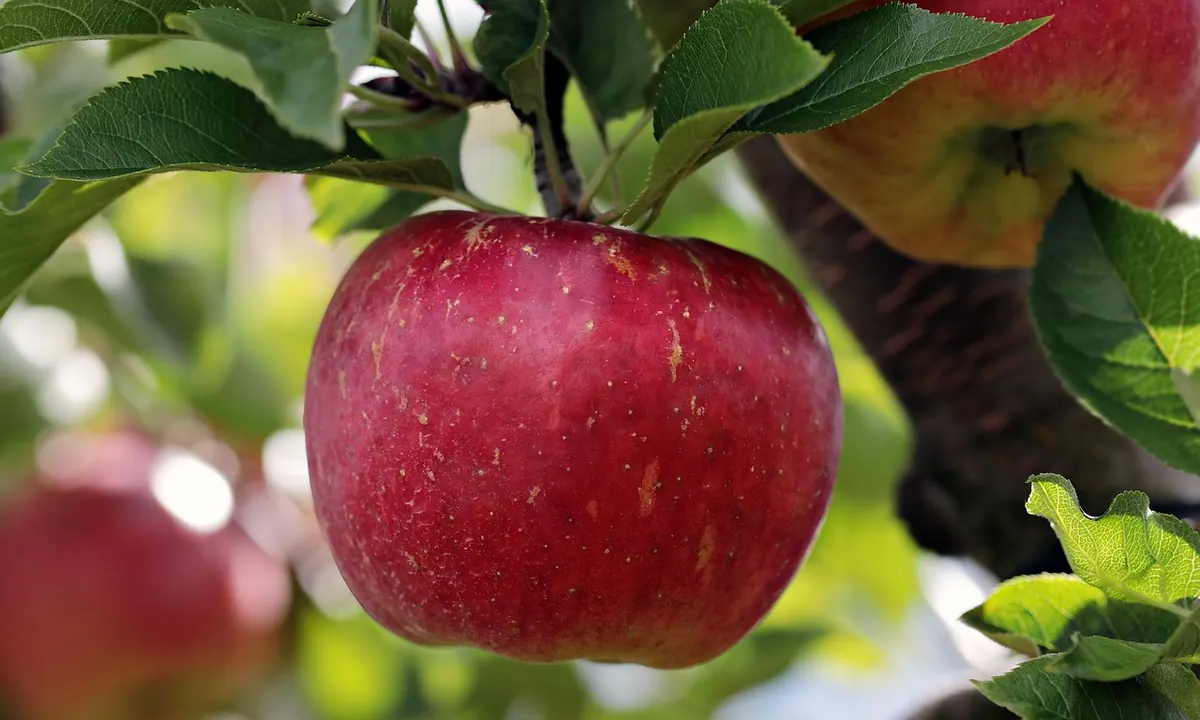
Growing Fruit Trees in Pots: A UK Patio Guide
October 10, 2026 - Gardening Tips

October 10, 2026 - Gardening Tips
October 07, 2026 - Varieties
Pots let you grow fruit where there is no soil at all: a paved courtyard, a balcony, a strip of gravel beside the back door. They also let you move a tree into the sunniest corner, and they keep greedy roots out of the rest of the garden. The trade-off is that a potted tree depends on you for almost everything — water, food, shelter — and it will never match one planted in open ground. Get the rootstock and container right, though, and you can be picking your own apples, pears and plums within two or three years.
Everything else follows from the rootstock, because it controls how vigorously the tree grows. On a patio that matters more than the variety. Ask for a dwarfing root when you buy, and buy bare-root in winter if you can.
Very dwarfing rootstocks have shallow, brittle roots, so a permanent stake is part of the tree, not an optional extra. Container roots are far more exposed than roots in soil, so a variety that shrugs off a cold winter in the ground can suffer in a pot.
Go bigger than you think. A 35–45cm pot is the bare minimum for a dwarf apple or pear; 50cm and upwards, holding 50 litres or more, is much easier to manage and dries out far more slowly. Anything smaller becomes a daily watering chore and a stunted, hungry tree.
Terracotta and glazed pots look lovely but are heavy and porous, losing moisture through the walls. Plastic is light enough to move when you want to chase the sun, and pale colours keep roots cooler in a hot, south-facing corner than black ones do. Drainage holes are essential, and the pot should stand on feet or bricks so water escapes and air reaches the base. Never leave a pot sitting permanently in a saucer of water.
Use a loam-based compost such as John Innes No. 3, mixed with about a third of multipurpose compost and a handful of grit or fine bark. Loam holds water and nutrients in a way that peat-free multipurpose alone does not, and a container tree is cropped hard.
From late spring to early autumn a potted fruit tree needs water most days, and twice a day in a heatwave. Rain rarely gets through a full canopy of leaves, so a wet morning does not mean a wet pot. Push a finger in 5cm; if it feels dry, water properly until it runs out of the drainage holes rather than giving a daily sprinkle. Irregular watering causes split and cracked fruit. Ease off in winter, when soggy compost rots roots, but check figs and evergreens — they can dry out under the eaves even in January.
Pots run short of nutrients quickly because every watering leaches a little away. Scatter a slow-release general fertiliser in March, then switch to a high-potash liquid feed — tomato feed is fine — every fortnight from June while the fruit is swelling. Yellow leaves with green veins usually point to a magnesium shortage; Epsom salts dissolved in water generally correct it. Too much nitrogen gives you leaves instead of fruit.
Keep the tree compact by summer-pruning this season's shoots back to a few leaves in late July or August, which slows growth and lets light and air reach the ripening fruit. Every two or three years, in late winter, lift the tree out, shave 3–4cm off the rootball and replant it in fresh compost.
Roots in a pot freeze from every side. Lift pots onto feet, wrap them in bubble wrap, hessian or an old blanket, and move them against a south- or west-facing wall. Peaches, nectarines and apricots flower early, so throw fleece over them on frosty nights. Most apples need a pollination partner — a neighbour's tree, a crab apple, or a second variety in another pot — though self-fertile varieties make life simpler where space is tight. Net cherries in June unless you are happy to feed the blackbirds first.
Buy bare-root trees between November and March; they establish well and cost less than potted ones. Choose fruit you actually like eating — 'Katy' or 'Discovery' for early apples, 'Sunset' for a reliable garden apple, 'Conference' for pears, 'Victoria' for plums. Give the tree six hours of sun, a pot of its own, and a watering can you will not forget. Fruit from a container tends to be smaller and slightly earlier than from open ground, and that is fine. A handful of warm plums eaten standing on the patio beats a supermarket punnet every time.
Photo: francisgoh / Pixabay
Reliable apple varieties for UK orchards that resist scab, mildew and canker, so you can spray less and still pick...

Netting, sacrificial fruit, wasp traps and prompt picking: a practical guide to protecting ripening orchard crops...
October 10, 2026 - Gardening Tips
October 07, 2026 - Varieties
Copyright © 2026 Orchard Zone. All Right Reserved.